
Updated July 2026
AI longevity clinics 2026 are no longer science fiction. They’re opening their doors in cities worldwide, promising to design personalized anti-aging plans using your DNA, biomarkers, and machine learning algorithms. The pitch sounds straight out of a sci-fi novel: upload your blood work, genetic data, and lifestyle habits into an AI system, and it generates a custom roadmap to slow your biological aging.
But here’s the question dividing Silicon Valley executives, biohackers, and regular people alike: Would you let artificial intelligence guide how you age?
The rise of AI longevity clinics 2026 represents more than a wellness trend. It’s a shift in how we approach aging, health optimization, and preventive medicine. These clinics are appearing from the Middle East to New York, offering services once available only to wealthy biohackers spending millions on experimental protocols.
This guide analyzes what AI longevity clinics 2026 actually offer, the science behind the claims, honest cost breakdowns, and how to evaluate whether they’re right for you. Based on published reporting, clinic documentation, and current research as of July 2026.
Medical disclaimer: This article is for informational purposes only and does not constitute medical advice. Longevity interventions, supplements, and off-label medications carry risks. Always consult a licensed physician before starting any health optimization protocol.
What Are AI Longevity Clinics 2026?
AI longevity clinics 2026 represent a shift from traditional reactive medicine. Unlike a family doctor who sees you once a year, these clinics treat aging itself as a condition to be tracked and addressed systematically.
Here’s how they typically work:
Step 1: Data Collection
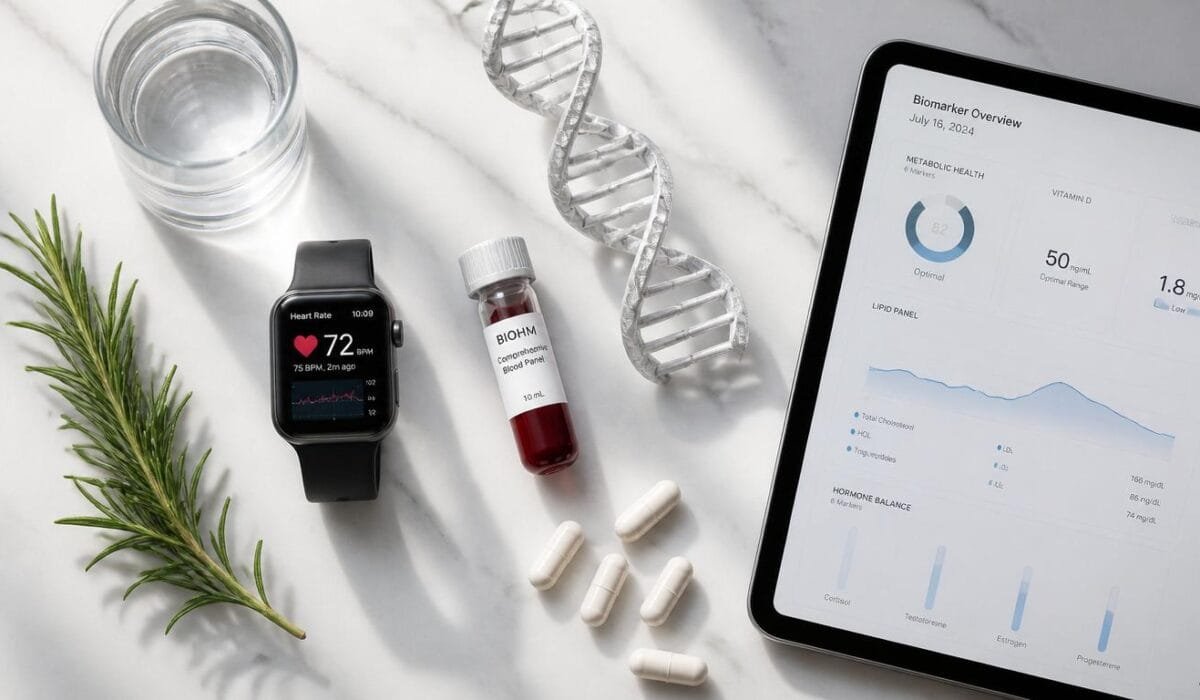
You undergo comprehensive testing that might include:
- Comprehensive blood work (50-100+ biomarkers)
- DNA sequencing (genetic predispositions to age-related diseases)
- Epigenetic age testing (biological age vs chronological age)
- Metabolic panels (how your body processes energy)
- Microbiome analysis (gut health impact on aging)
- Body composition scans (muscle mass, fat distribution, bone density)
- Wearable data integration (sleep quality, heart rate variability, activity)
Step 2: AI Analysis
The data feeds into machine learning algorithms trained on longevity studies. The AI compares your biomarkers against reference ranges, identifies risk patterns, and generates a personalized protocol.
Step 3: Custom Protocol
You receive a plan that might include supplement recommendations, diet modifications, exercise prescriptions, sleep optimization, stress management guidance, and in some cases physician-supervised medication recommendations (off-label drugs studied for longevity effects).
Step 4: Continuous Monitoring
Unlike traditional medicine’s annual approach, AI longevity clinics 2026 track you continuously through wearables, periodic blood tests, and regular check-ins. The AI adjusts your protocol based on how your biomarkers respond. This continuous feedback loop distinguishes AI longevity clinics 2026 from both traditional medicine and concierge healthcare.
The Man Who Made It Famous: Bryan Johnson’s Blueprint
If you’ve heard of AI-driven longevity, you’ve probably heard of Bryan Johnson, the tech entrepreneur who sold Braintree (which included Venmo) to PayPal for $800 million in 2013, and now spends approximately $2 million per year on his anti-aging project called Blueprint.
What makes Blueprint notable:
- A team of 30+ medical experts reviews longevity research to design his protocol
- Biological age testing across multiple organ systems
- Documented results: Johnson claims to have reversed his biological age by approximately 5.1 years and his skin age by around 9 years
- Public transparency: Every protocol, biomarker, and result is published online
- Democratization attempts: Blueprint sells supplements and shares the framework for free
Importantly, Johnson’s protocol has evolved significantly. By March 2026, he had reduced his daily supplement intake from 111 pills to around 30, and dropped rapamycin (a widely discussed longevity drug) in 2024 due to side effects. In June 2026, he announced a diagnosis of autoimmune gastritis, a reminder that even the most rigorously optimized protocols carry uncertainties.
The controversy? Johnson’s extreme approach, which once included plasma exchanges with his teenage son (later discontinued after he reported no benefit), has been called everything from “the future of medicine” to “Silicon Valley narcissism.”
Here’s the honest assessment: Johnson’s biomarker improvements are publicly documented, but he represents an N=1 self-experiment, not a controlled clinical trial. Critics including longevity scientists note that no amount of supplementation changes your underlying genes, and much of his benefit likely comes from foundational habits (sleep, exercise, plant-forward diet, no alcohol) that cost under $100 per month rather than the expensive experimental interventions.
In February 2026, Johnson launched “Immortals,” offering his exact protocol to three clients at $1 million per year each, illustrating both the demand and the extreme cost ceiling of this space.
AI Longevity Clinics 2026: The Democratization Question
While Bryan Johnson represents the multi-million-dollar extreme, AI longevity clinics 2026 aim to make personalized aging protocols accessible to people without eight-figure net worths. Services that once required millions are now marketed to professionals willing to invest $3,000-$10,000 per year.
The global longevity market is projected to reach substantial scale by 2027, with AI-driven personalized protocols leading growth. What started as fringe biohacking is attracting venture capital, medical institutions, and clinical research.
However, it’s worth maintaining honest skepticism. The gap between marketing claims and proven long-term outcomes remains significant, and much of this sector is commercially motivated to sell testing, supplements, and services.
Real Clinics Operating in 2026
Next Health (multiple US locations)
- Membership tiers starting around $199/month
- Annual biomarker testing, AI-generated health insights
- Add-on services: IV therapy, hormone optimization, advanced diagnostics
Fountain Life (multiple US states)
- Annual cost ranges widely ($15,000-$50,000+ depending on services)
- Advanced diagnostics, continuous monitoring
- AI-powered risk detection
Human Longevity (California)
- Comprehensive genomic and diagnostic testing
- AI-driven health risk assessment
Note: Specific pricing and offerings change frequently. Verify current details directly with any clinic before making decisions.
The Cost Reality Check
Premium tier: $15,000-$50,000+/year
- Comprehensive testing every 3-6 months
- Advanced therapies and dedicated medical team plus AI insights
Mid-tier: $3,000-$10,000/year
- Quarterly biomarker testing
- AI-generated protocols and telemedicine check-ins
Entry-level: $200-$500/month
- Annual comprehensive testing
- Basic AI protocol with self-implementation
DIY approach: $100-$300/month
- At-home test kits (InsideTracker, TruDiagnostic, Function Health)
- Free protocols and self-tracking via wearables
Notably, evidence suggests the foundational habits driving most health benefit (quality sleep, strength training, plant-forward nutrition, avoiding alcohol and nicotine) are well-supported by research and cost relatively little. The expensive interventions carry far less evidence.
The Broader AI Landscape in 2026
The AI longevity clinics 2026 trend sits within a rapidly advancing AI landscape. The same machine learning advances powering Claude Fable 5 and the GPT-5.6 family enable the pattern recognition that longevity clinics apply to biomarker analysis.
The dual nature of AI in 2026 is striking. While some companies use AI to reduce their workforce, others apply it to extend human healthspan. The technology cuts both ways. For a broader view of how AI is reshaping industries, see our analysis of AI’s hidden costs and the current AI model landscape.
What the AI Actually Does: Science vs Hype
Let’s get specific about what these AI systems can and can’t do.
What AI Longevity Systems Do Well
Pattern recognition across large datasets. AI can analyze your biomarkers against databases of longevity studies faster than any human doctor, potentially spotting risk patterns humans might miss (like elevated cardiovascular risk from combined ApoB levels and genetic markers even when standard cholesterol appears normal).
Personalized intervention matching. Instead of generic advice, AI can match interventions to your specific biology based on genetic variants and biomarker profiles.
Multi-variable optimization. Aging involves many interrelated biological processes. AI can consider protocols across multiple variables simultaneously.
Continuous adaptation. AI protocols can adjust based on your measured response over time.
What AI Can’t Do
Understand full context. AI doesn’t know you’re stressed because of a life event rather than a physiological disorder.
Predict individual response perfectly. Longevity studies are done on populations. AI can estimate probability but can’t guarantee you’ll respond like the average.
Account for the newest research. AI is trained on existing studies. Breakthrough findings won’t appear in protocols until models are updated.
Replace human medical judgment safely. This is critical. AI might recommend an intervention based on population data without knowing your specific contraindications. The best AI longevity clinics 2026 combine AI insights with licensed physician oversight. The AI analyzes data, but a real doctor makes final decisions on any medical interventions.
The Controversy: Should We Trust AI With Our Lifespan?
The optimists argue: AI processes more data than any human doctor and catches risks we’d miss. Personalized medicine is the future. Bryan Johnson’s documented results demonstrate measurable improvement.
The skeptics counter: Most longevity interventions aren’t proven in long-term human trials. AI trained on population data can’t guarantee individual results. The clinics have inherent conflicts of interest selling supplements and services. We don’t know long-term effects of aggressive biological intervention. And the data privacy implications of sharing genetic and health data are serious.
The scientists caution: Biological age testing is promising but not yet standardized (different tests give different results). Many interventions that work in mice fail in humans. We need 20-year longitudinal studies but are only a few years into this trend. Even the “optimal” biomarker ranges are debated among experts.
All three perspectives contain truth. Responsible engagement with AI longevity clinics 2026 means holding optimism and skepticism simultaneously.
Who’s Using AI Longevity Clinics 2026?
Current adopters include Silicon Valley executives, data-obsessed biohackers, high-net-worth individuals over 50, chronic disease patients seeking answers traditional medicine hasn’t provided, and health-optimized professionals like doctors and athletes.
An emerging shift in 2026: enrollment is expanding to corporate executives in their 50s, professional athletes extending careers, and younger professionals in their 30s viewing longevity as long-term investment. One notably growing segment is women over 45 seeking hormone optimization and menopause management, an area traditional medicine has historically underserved.
Most people, however, remain in “wait and see” mode, wanting to see 10-year results before committing, sticking with proven diet and exercise, or citing cost and data privacy concerns.
Should YOU Consider AI Longevity Clinics 2026?
Here’s an honest framework. The decision involves values, risk tolerance, and finances, not just enthusiasm for technology.
Consider it if:
- You’re over 40 and want to optimize healthspan (healthy years, not just lifespan)
- You have genuinely disposable income ($3K-$10K/year without financial stress)
- You’re willing to follow complex protocols consistently
- You value data and are comfortable with reasonable experimentation
- You have specific health concerns traditional medicine hasn’t resolved
- You work with the clinic’s physicians, not just the AI
Skip it if:
- You’re under 30 with no health issues (limited return on investment)
- You can’t afford it without financial strain
- You won’t follow through on recommendations
- You have significant privacy concerns about genetic and health data
- You’re satisfied with evidence-based traditional preventive care
- You philosophically oppose intensive aging intervention
Middle ground (test the waters):
- Try at-home biomarker testing first ($200-$500)
- Follow free evidence-based protocols
- Focus on the well-supported foundations: sleep, strength training, plant-forward diet, no smoking, limited alcohol
- Track progress for 6 months before deciding on a clinic
The strongest evidence-based advice: the foundational habits deliver most of the benefit at minimal cost. Start there before spending on premium interventions with weaker evidence.
The Bigger Picture: Societal Implications
If AI longevity clinics 2026 become mainstream, healthcare could shift from reactive treatment toward proactive optimization, with meaningful implications.
Potential upside: Preventive medicine at scale, healthcare cost reduction through prevention, improved quality of life, and eventually democratized access as costs fall.
Potential downside: Longevity inequality (wealthy people accessing life extension unavailable to others), insurance complications, data exploitation risks, and psychological pressure around health optimization.
These tensions remain unresolved and worth watching as the sector matures.
FAQs
1. What is an AI longevity clinic?
An AI longevity clinic uses artificial intelligence to analyze biomarkers, genetic data, and lifestyle factors, creating personalized health optimization plans. These clinics focus on extending healthspan (healthy years of living) through data-driven interventions combined with physician oversight. Always verify a clinic includes licensed medical supervision.
2. How much do AI longevity clinics cost?
AI longevity clinic costs range widely. Entry-level programs run $200-$500/month, mid-tier comprehensive programs cost $3,000-$10,000/year, and premium tiers can exceed $15,000-$50,000 annually. DIY approaches using at-home testing cost $100-$300/month. Notably, foundational health habits that drive most benefits cost far less.
3. Do AI longevity clinics actually work?
Early evidence is promising but limited. Participants report improved biomarkers (blood pressure, cholesterol, inflammation). However, long-term data on actual lifespan extension is limited since these clinics are new (2024-2026). The well-supported benefits come from foundational habits (sleep, exercise, nutrition) rather than experimental interventions, which remain largely unproven in long-term human trials.
4. Is Bryan Johnson’s Blueprint protocol proven to work?
Johnson’s biomarker improvements are publicly documented, and he claims roughly 5.1 years of biological age reversal. However, this is an N=1 self-experiment, not a controlled clinical trial. Scientists note most benefits likely come from foundational habits (good sleep, exercise, plant-forward diet, no alcohol) rather than expensive interventions. Notably, Johnson dropped rapamycin in 2024 and reduced his supplements from 111 to about 30 by 2026, and was diagnosed with autoimmune gastritis in June 2026.
5. Are AI longevity clinics safe?
Safety depends heavily on physician oversight. Reputable AI longevity clinics 2026 combine AI analysis with licensed medical supervision. Risks include unproven interventions, off-label medication side effects, supplement interactions, and data privacy concerns. Never follow AI-generated medical recommendations without physician review of your specific health situation and contraindications.
6. Where can I find AI longevity clinics?
Notable operators include Fountain Life, Human Longevity (California), and Next Health (multiple locations), with many expanding to additional cities and telemedicine in 2026. At-home alternatives include InsideTracker, TruDiagnostic, and Function Health. Verify current offerings, pricing, and medical credentials directly before committing.
7. Should I start with a longevity clinic or basic habits first?
Start with foundational habits. Research strongly supports sleep quality, strength and cardiovascular training, plant-forward nutrition, and avoiding alcohol and nicotine, all low-cost interventions delivering most measurable health benefits. Consider at-home biomarker testing ($200-$500) to establish a baseline. Only invest in premium AI longevity clinics after mastering the fundamentals, since the expensive interventions carry weaker evidence.
The Bottom Line on AI Longevity Clinics 2026
AI longevity clinics 2026 are here, growing, and producing measurable biomarker improvements for those who can afford them and commit to protocols. Whether they represent the future of medicine or an expensive experiment for the wealthy remains genuinely uncertain.
What’s clear:
- AI excels at pattern recognition across biomarker data
- The technology shows promising biomarker improvements in early results
- Long-term outcomes (actual lifespan extension) remain unproven, requiring 20+ year data
- Costs are dropping but remain prohibitive for most ($3K-$50K/year)
- Foundational habits deliver most benefit at minimal cost
- AI cannot safely replace human medical judgment
The honest question isn’t “Do AI longevity clinics 2026 work?” It’s “Are you willing to invest significant money and time being an early adopter of technology still in its adolescence, when the proven fundamentals cost far less?”
For Bryan Johnson and thousands of others, the answer is yes. For most people, starting with evidence-based fundamentals and watching the sector mature is the wiser path.
This article is for educational purposes only and does not constitute medical advice. Consult a licensed physician before beginning any health optimization protocol, supplement regimen, or medication.
Related resources:
- AI Layoffs 2026: Which Jobs Are Actually at Risk?
- Hidden Cost of AI 2026
- ChatGPT Alternatives 2026
- Claude Fable 5 vs Opus 4.8 vs Sonnet 5

Mahdi Ayadi is the founder of AI Empire Media and a growth marketing strategist with over 6 years of experience in B2B SaaS and technology sectors. He leverages AI-driven marketing, SEO, and performance optimization to build scalable digital products that deliver measurable results.
With a background spanning cybersecurity, pharmaceutical digital marketing, and corporate travel technology, plus corporate finance consulting experience, Mahdi has deep expertise in evaluating AI tools from both technical and business perspectives. He has led market expansion across international markets, managed enterprise accounts, and presented at major technology exhibitions.
At AI Empire Media, Mahdi covers AI tools, automation platforms, technology reviews, pricing analysis, and practical implementation strategies. Connect on LinkedIn →