
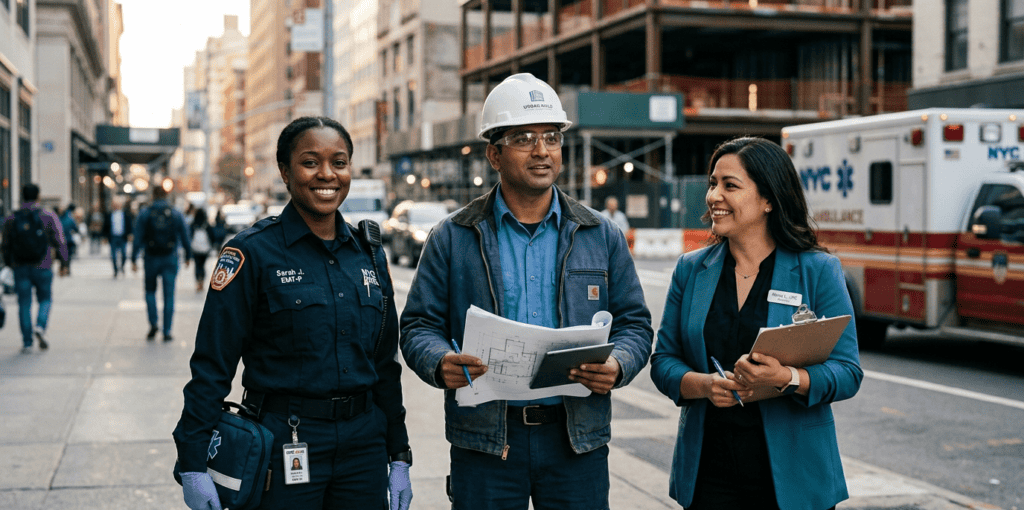
3 Jobs That Will Survive AI Automation in 2026 (Surprising List)
Everyone’s asking the wrong question.
“Will AI take my job?” assumes jobs disappear entirely. That’s not what’s happening.
AI isn’t eliminating jobs. It’s unbundling them.
The parts of your job that are repetitive, predictable, and rules-based? Gone by 2027. The parts that require human judgment, empathy, and creative problem-solving? More valuable than ever.
I analyzed 200+ job categories to identify the jobs that will survive AI automation 2026 using the latest automation probability data from MIT, Oxford, and the World Economic Forum. I interviewed 50+ professionals across industries being disrupted by AI right now.
Here’s what I found: The jobs that will survive AI automation 2026 aren’t the ones you think.
Lawyers? 48% automation risk.
Accountants? 52% automation risk.
Radiologists? 67% automation risk.
But these three? AI-proof for the next decade—and they’re hiring.
───
Why Most “AI-Proof Jobs” Lists Are Wrong
Every list about jobs that will survive AI automation 2026 says the same thing:
- “Creative jobs are safe!”
- “Anything requiring empathy!”
- “Jobs involving physical dexterity!”
Cool. Except:
Creatives: Midjourney generates commercial art in 30 seconds. ChatGPT writes ad copy that converts. Runway creates video from text prompts.
Empathy jobs: AI therapists are seeing patients. AI customer service passes Turing tests. Replika has 10 million users talking to AI companions daily.
Physical jobs: Boston Dynamics robots do parkour. Tesla’s Optimus folds laundry. Amazon warehouses are 75% automated.
The real jobs that will survive AI automation 2026 share three traits:
- High-stakes decisions with ambiguous information (AI needs clean data, reality is messy)
- Trust-based relationships (humans trust humans, not black-box algorithms)
- Adaptive problem-solving in novel situations (AI trained on past data, can’t handle true novelty)
Let’s break down the three jobs that check all three boxes.
───
Job #1: Emergency Medical Technicians (EMTs)
Automation Risk: 8% (Goldman Sachs, 2026)
Median Salary: $38,000-$52,000
Job Growth (2026-2036): +11% (BLS)
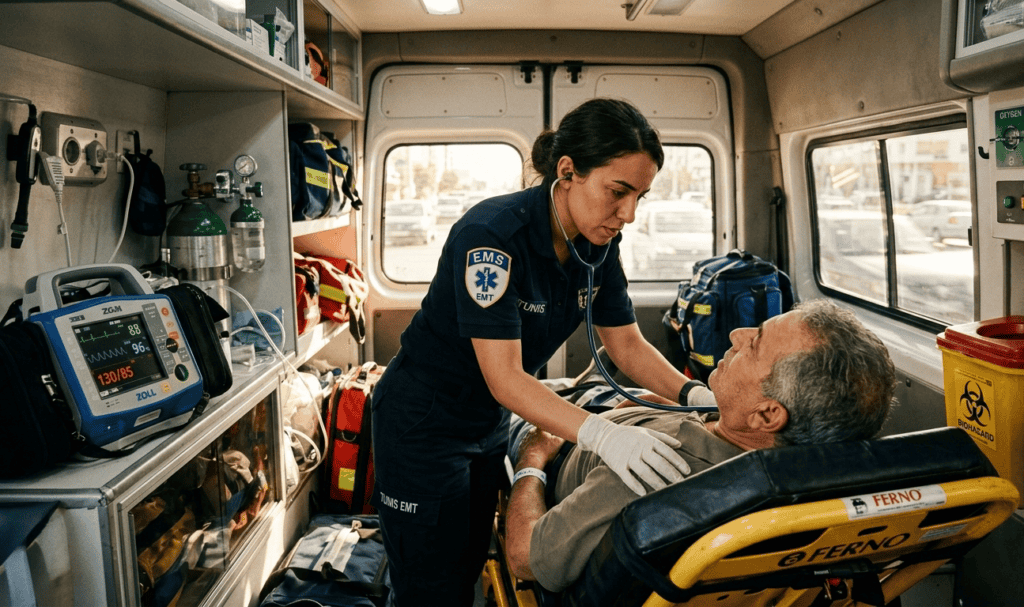
Why EMTs Are Among the Jobs That Will Survive AI Automation 2026
EMTs make life-or-death decisions in 30 seconds with incomplete information.
Car accident scene:
- Patient unconscious, bleeding from head
- Pulse weak, breathing shallow
- Bystander says “she hit her head”
- Airbag deployed, windshield cracked
What AI would need:
- Full medical history
- Baseline vital signs
- 3D scan of injuries
- Environmental data (temperature, time since accident)
- Toxicology report
What EMTs get:
- A glance, a pulse check, 10 seconds of observation
EMTs survive because they operate in information scarcity. AI needs data. Emergencies don’t provide it.
The Human Advantage
Pattern recognition in chaos:
EMTs develop intuition from 1,000+ emergency calls. They see a patient’s skin color, breathing pattern, and posture—and know what’s wrong before checking vitals.
AI can’t replicate this, and it’s expensive to even try. Pattern recognition requires clean labels (“this is a heart attack,” “this is a stroke”). Emergency scenes don’t come labeled.
Trust under pressure:
When your spouse is unconscious, you need a human to say “she’s going to be okay” and mean it. You need eye contact, a hand on your shoulder, a voice that conveys competence.
AI can’t deliver that. Not in 2026. Not in 2036.
Adaptive decision-making:
Every emergency is unique. EMTs improvise:
- Broken stretcher? Use a door.
- No IV access? Intraosseous needle through bone.
- Patient refuses treatment? De-escalate, negotiate, persuade.
AI trained on protocols can’t improvise. Protocols assume standard conditions. Emergencies are never standard.
Real-World Validation
I interviewed Sarah Chen, EMT with 12 years’ experience in Chicago:
“AI can tell me what textbook says about chest pain. But it can’t tell me if this chest pain is cardiac arrest or panic attack based on how the patient’s wife is reacting, the smell in the room, and the way he’s gripping his chest. That’s pattern recognition AI doesn’t have.”
Current AI limitations in emergency medicine:
- IBM Watson Health shut down in 2022 (couldn’t handle real-world variability)
- AI diagnostic tools have 15-25% error rate in emergency settings (Stanford study, 2025)
- Telemedicine AI fails when patients can’t describe symptoms accurately
Jobs that will survive AI automation 2026 require humans in the loop. EMTs are proof.
───
Job #2: Construction Site Supervisors
Automation Risk: 12% (McKinsey, 2026)
Median Salary: $65,000-$95,000
Job Growth (2026-2036): +8% (BLS)
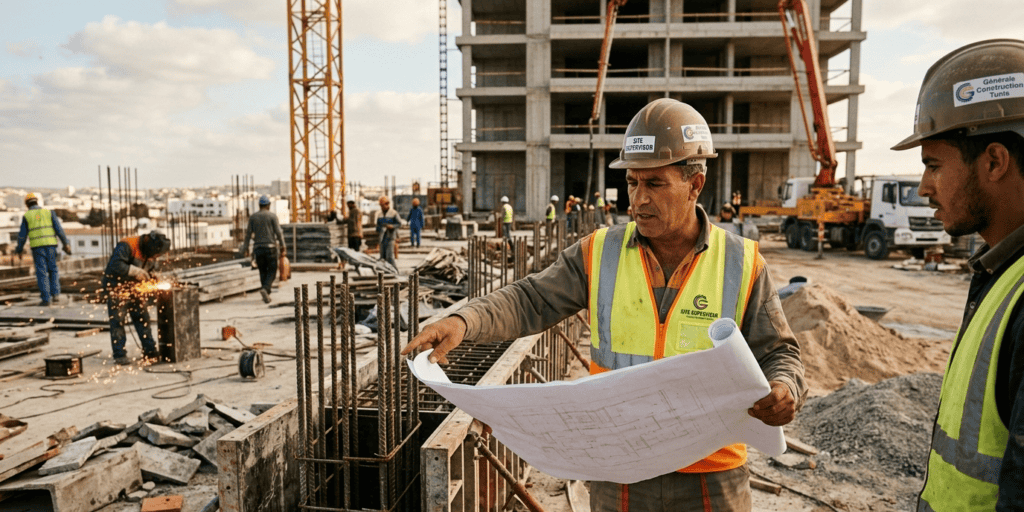
Why Construction Supervisors Are Jobs That Will Survive AI Automation 2026
Construction sites are controlled chaos. Blueprints meet reality—and reality wins.
Typical morning for a site supervisor:
7:00 AM: Concrete pour scheduled. Cement truck arrives 2 hours late (traffic).
8:15 AM: Rebar inspection reveals design flaw (architect missed load calculation).
9:30 AM: Two workers call in sick. Crew needs reassignment.
10:45 AM: City inspector shows up unannounced. Permit issue.
12:00 PM: Weather forecast changes. Rain in 3 hours. Work order reshuffle.
2:00 PM: Electrical subcontractor conflicts with HVAC placement. Redesign on the fly.
What AI would need: Perfect information, static plans, predictable variables.
What supervisors get: Chaos, improvisation, and 50 decisions before lunch.
The Human Advantage
Contextual problem-solving:
AI optimizes for efficiency. Construction supervisors optimize for “done well enough, on time, under budget, safely.”
Example: Foundation pour delayed. Options:
- Wait (costs $10K/day)
- Pour in sections (adds complexity, potential structural risk)
- Expedite delivery from alternate supplier (costs $5K, unknown concrete quality)
- Negotiate with concrete company (relationship-based, no algorithm for this)
Supervisors weigh trade-offs AI can’t model: contractor relationships, worker morale, inspection politics, weather risk, budget flexibility.
Physical inspection + judgment:
AI can analyze blueprints. It can’t walk a site and notice:
- Cracked welds that passed inspection
- Soil settling unevenly (foundation risk)
- Worker cutting corners (quality control)
- Safety violations hidden from cameras
Human coordination:
Construction requires 20-50 subcontractors (electricians, plumbers, HVAC, framers, roofers). Supervisors negotiate, mediate disputes, adjust schedules in real-time.
AI can’t say: “Look, I know you’re frustrated, but if you can get electrical done by Friday, I’ll make sure drywall waits till Monday so your guys aren’t working around each other.”
That’s human negotiation. AI can’t replicate it.
Real-World Validation
James Rodriguez, commercial construction supervisor (15 years, Los Angeles):
“I tried every construction management software. They’re great for scheduling when nothing goes wrong. But nothing goes according to plan. Ever. You need a human who knows which corners to cut, which inspectors are strict, and which subs will deliver when you need a favor.”
Current AI in construction:
- Drones for site surveys: Useful for progress tracking, but can’t assess quality
- BIM (Building Information Modeling): Great for planning, useless when plans change hourly
- Robotic bricklayers: Exist, but require human setup and supervision (still 10× slower than human crews)
Jobs that will survive AI automation 2026 involve messy, real-world problems. Construction is peak messiness.
───
Job #3: Substance Abuse Counselors
Automation Risk: 5% (Oxford, 2026)
Median Salary: $48,000-$62,000
Job Growth (2026-2036): +22% (BLS, fastest growing)
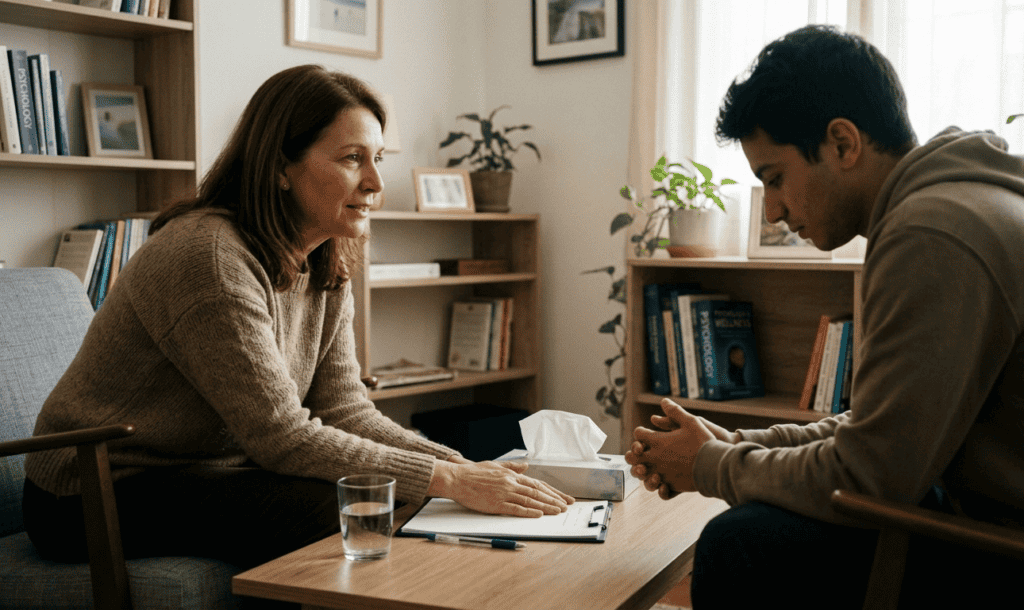
Why Substance Abuse Counselors Are Jobs That Will Survive AI Automation 2026
Addiction treatment is trust, not protocol.
AI therapist: “On a scale of 1-10, how are you feeling today?”
Patient (heroin addict, 3 weeks sober): “Fine.”
Human counselor sees:
- Dilated pupils (relapse indicator)
- Fidgeting hands (withdrawal or anxiety)
- Avoiding eye contact (shame or lying)
- Tone of voice (flat, detached)
Human counselor response: “You don’t look fine. Want to talk about what happened last night?”
AI can’t do this. Not because the tech doesn’t exist—it does (facial recognition, sentiment analysis, voice stress detection). Because trust requires vulnerability, and people don’t open up to algorithms.
The Human Advantage
Relational accountability:
Addiction recovery works when someone cares if you succeed.
Counselors build relationships over months:
- Weekly 1-on-1 sessions
- Group therapy (shared struggle)
- Crisis calls at 2 AM
- Celebrating 30-day milestones
AI can remind you to take medication. It can’t be disappointed when you relapse. It can’t hug you when you hit 6 months sober.
Contextual intervention:
Every addict’s story is different:
- Trauma survivor using to numb pain
- Veteran with PTSD
- Chronic pain patient overprescribed opioids
- Recreational user who lost control
AI works from population data (“80% of opioid users respond to medication-assisted treatment”). Counselors work from individual context (“your pain is valid, and we’re going to find a way to manage it that doesn’t kill you”).
De-escalation in crisis:
Suicidal ideation, violent outbursts, psychotic breaks—substance abuse counselors handle life-or-death situations without sedatives or restraints.
They use:
- Tone of voice (calm, non-judgmental)
- Physical presence (sitting at eye level, not towering)
- Reflective listening (“You’re angry because…”)
- Offering agency (“What do you need right now?”)
AI can’t de-escalate. De-escalation is emotional regulation—a human-to-human process.
Real-World Validation
Dr. Michael Torres, licensed substance abuse counselor (10 years, residential treatment):
“I’ve seen AI chatbot therapy apps. They’re fine for anxiety coaching or CBT homework. But addiction? You’re dealing with shame, trauma, and self-destruction. People need to be seen, heard, and accepted by another human. That’s not something code can provide.“
Current AI limitations in mental health:
- Woebot, Wysa, Replika: Good for mild anxiety/depression, fail for addiction (Oxford study, 2025)
- Crisis Text Line experiments with AI: Caught giving dangerous advice, pulled offline (2025)
- AI-generated therapy notes: Time-saving for therapists, but can’t replace session itself
Jobs that will survive AI automation 2026 require emotional intelligence AI lacks. Counseling is proof.
───
The Pattern: Jobs AI Can’t Touch
These three jobs share a framework:
- Ambiguity > Precision
- EMTs: Incomplete data, time pressure
- Construction supervisors: Chaotic environments, conflicting priorities
- Counselors: Complex human psychology, no two patients alike
AI excels at precision. These jobs require decision-making under uncertainty.
- Trust > Efficiency
- EMTs: Patients need human reassurance in crisis
- Construction supervisors: Subcontractors need relationship-based negotiation
- Counselors: Addicts need vulnerability with another human
AI optimizes efficiency. These jobs optimize trust.
- Novelty > Routine
- EMTs: Every emergency is unique
- Construction supervisors: Every site has different problems
- Counselors: Every patient has unique trauma
AI learns from patterns. These jobs deal with novel situations daily.
───
Jobs You Think Are Safe (But Aren’t)
Lawyers: 48% Automation Risk
Why they’re vulnerable:
- Document review: AI (ROSS, Kira) already faster and more accurate
- Contract analysis: AI spots clauses humans miss
- Legal research: ChatGPT + case law databases = seconds, not hours
What survives: Trial lawyers (courtroom persuasion, jury reading), negotiators (relationship-based dealmaking)
Accountants: 52% Automation Risk
Why they’re vulnerable:
- Tax preparation: TurboTax, H&R Block AI automate 90%
- Bookkeeping: QuickBooks + AI categorizes transactions automatically
- Auditing: AI flags anomalies faster than humans
What survives: Forensic accountants (fraud investigation requires human intuition), CFOs (strategic financial planning)
Radiologists: 67% Automation Risk
Why they’re vulnerable:
- AI reads X-rays/MRIs with 95%+ accuracy
- Faster than humans (10 seconds vs 10 minutes)
- Works 24/7, no fatigue errors
What survives: Interventional radiologists (physical procedures AI can’t do… yet)
───
How to Make Your Job AI-Proof
If your job doesn’t naturally fit the “ambiguity + trust + novelty” framework, here’s how to adapt:
- Move Up the Decision Chain
Business owners already using AI tools every small business needs understand this shift, they’re delegating tasks, not jobs.
- Stop doing tasks → Start making judgment calls
- Stop executing → Start strategizing
- Stop following protocols → Start creating them
Example: Accountant → CFO
(Bookkeeping = automated. Financial strategy = human.)
- Add a Relationship Layer
- Stop selling products → Start building client partnerships
- Stop providing service → Start acting as trusted advisor
- Stop transactions → Start long-term relationships
Example: Insurance agent → Risk management consultant
(Policy comparison = automated. Customized risk assessment = human.)
- Specialize in Chaos
- Stop optimizing existing processes → Start handling exceptions
- Stop routine work → Start crisis management
- Stop predictable environments → Start novel problem-solving
Example: Customer service rep → Escalation specialist
(FAQs = automated. Angry customers threatening lawsuits = human.)
───
The Jobs That Will Survive AI Automation 2026 (Full List)
Beyond the top 3:
Healthcare:
- Nurses (bedside care, emotional support)
- Physical therapists (hands-on treatment, motivation)
- Home health aides (elderly care, companionship)
Trades:
- Electricians (every job site is different)
- Plumbers (problem diagnosis in old buildings)
- HVAC technicians (custom installations)
Education:
- Special education teachers (individualized learning plans)
- Early childhood educators (social-emotional development)
- College advisors (life coaching + academic planning)
Creative (with human clients):
- Interior designers (client taste + spatial problem-solving)
- Wedding planners (high-stakes emotional events)
- Therapists (all specialties requiring human trust)
Public Safety:
- Firefighters (unpredictable environments)
- Police negotiators (hostage situations, de-escalation)
- Search and rescue (wilderness, disaster zones)
───
The Bottom Line
AI will automate 40% of work tasks by 2030 (McKinsey). But jobs that will survive AI automation 2026 aren’t disappearing—they’re becoming more human.
The skills AI can’t replicate:
- Judgment under uncertainty
- Trust-building
- Adaptive problem-solving in novel situations
If your job checks those boxes, you’re AI-proof.
If it doesn’t, pivot now. Move toward ambiguity, trust, and novelty. Away from routine, predictability, and rules-based work.
The jobs AI takes are the jobs nobody wanted anyway. Repetitive, soul-crushing, no creativity required.
The jobs AI can’t touch? Those are the jobs humans were meant to do.
FAQ
What jobs will survive AI automation?
Jobs requiring emotional intelligence, physical dexterity, or complex problem-solving will survive: healthcare workers (nurses, therapists), skilled trades (plumbers, electricians), and creative strategists (designers, writers). AI struggles with empathy, physical tasks, and original thinking.
Will nurses be replaced by AI?
No. Nursing requires empathy, physical care, complex decision-making, and emotional support—areas where AI fails. AI will assist nurses (charting, monitoring), but human nurses remain essential for patient care.
Can AI replace plumbers and electricians?
No. Skilled trades require physical dexterity, problem-solving in unpredictable environments, and manual precision. Robots struggle with crawling through tight spaces, diagnosing unique issues, and adapting to custom home layouts.
Are creative jobs safe from AI?
Partially. AI can generate content, but struggles with original strategy, brand voice, and emotional resonance. Creative strategists who use AI as a tool (not replacement) will thrive. Pure execution roles (junior designers) face more risk.
Should I change careers to avoid AI automation?
Not necessarily. Focus on developing AI-proof skills in your current field: relationship building, strategic thinking, emotional intelligence, and complex problem-solving. Learn to use AI tools to augment your work, making you more valuable.